In short: Opening a bar in France starts with a drinks licence: a licence III for wine and beer or a licence IV for spirits. New licence IVs cannot be created, so you buy one. The manager needs an operating permit from a course of at least 20 hours and must declare the opening at the town hall 15 days ahead.
Opening a business in any locality comes with its own set of rules & regulations, and opening a bar is not an exception. When opening a bar in France, those rules are unusually tight, because the state limits both the number of places that can sell alcohol and where they can be. This guide sets out the main steps using the official business portal Service Public Entreprendre, Santé publique France and specialist accountants and trainers who explain the rules in English. It is general information, not legal advice; check with the town hall and an adviser before you sign a lease. For the evening side of the trade, see our guide to Cannes beach clubs and nightlife.
Some definitions. A débit de boissons is any outlet that sells drinks. A licence III, or restricted licence, covers drinks up to 18 degrees, such as wine and beer. A licence IV, or full licence, adds spirits. The permis d’exploitation is the operating permit, a training certificate the operator must hold. A cerfa is a numbered official form.
Opening a bar in France: which licence do you need?
It depends on what you pour and whether customers must eat. Service Public Entreprendre says that any establishment selling alcohol to drink on site or to take away must have a licence. Its table of drink groups puts wine, beer, cider and similar drinks up to 18 degrees in group 3, and spirits such as rum, gin, vodka, whisky and pastis in groups 4 and 5.
| Licence | Drinks | Typical business |
|---|---|---|
| Licence III | Group 3, up to 18 degrees | Wine bar, café |
| Licence IV | All groups, spirits included | Bar, pub, cocktail bar |
| Small restaurant licence | Group 3, only with a meal | Restaurant, pizzeria |
| Restaurant licence | All groups, only with a meal | Restaurant, brasserie |
The table follows Voxtya and OA Formation. A restaurant that wants to serve drinks without food needs a licence III or IV, not a restaurant licence.
The licence IV problem
The full licence is the one most bars want, and it is the hardest to get. Service Public Entreprendre states plainly that the creation of any new licence IV is prohibited, so the only way to open a new establishment with one is to buy a licence from an owner who wants to transfer it. Santé publique France adds that quotas apply, of one establishment per 450 residents.
That scarcity sets the price. The Living France guide quotes licences at around €10,000 to €20,000, while Licence 4 says the price depends heavily on location and local demand. A licence can usually be transferred within the same department, and Hayot Expertise notes that the mayor’s opinion is needed when the commune it leaves has only one such outlet.
The operating permit
A licence is not enough on its own. Anyone declaring the opening, change of owner, move or transfer of a bar with a licence III or IV must hold the permis d’exploitation, set out in article L3332-1-1 of the Public Health Code. According to Voxtya, which summarises Service Public Entreprendre, the course lasts at least 20 hours over at least three days, can be taken in person or by video conference and costs up to about €1,000. The permit is valid for ten years and is renewed with a course of at least six hours.
The same permit covers night-time sales on site. A Service Public Entreprendre page on night sales says bars and restaurants serving on site need no extra training to sell at night; only take-away sales at night need a special permit.
Declaring the opening
The licence is obtained by declaration. The official cerfa page says the form, cerfa 11542, must be sent at least 15 days before opening, to the town hall in most communes and to the prefecture in Paris and Alsace-Moselle. It must come with proof of identity and a valid operating permit less than ten years old. The receipt, cerfa 11543, is issued immediately and is the proof that the operator holds a licence. As OA Formation puts it: no permit, no receipt; no receipt, no right to sell alcohol.
Where you cannot open a bar
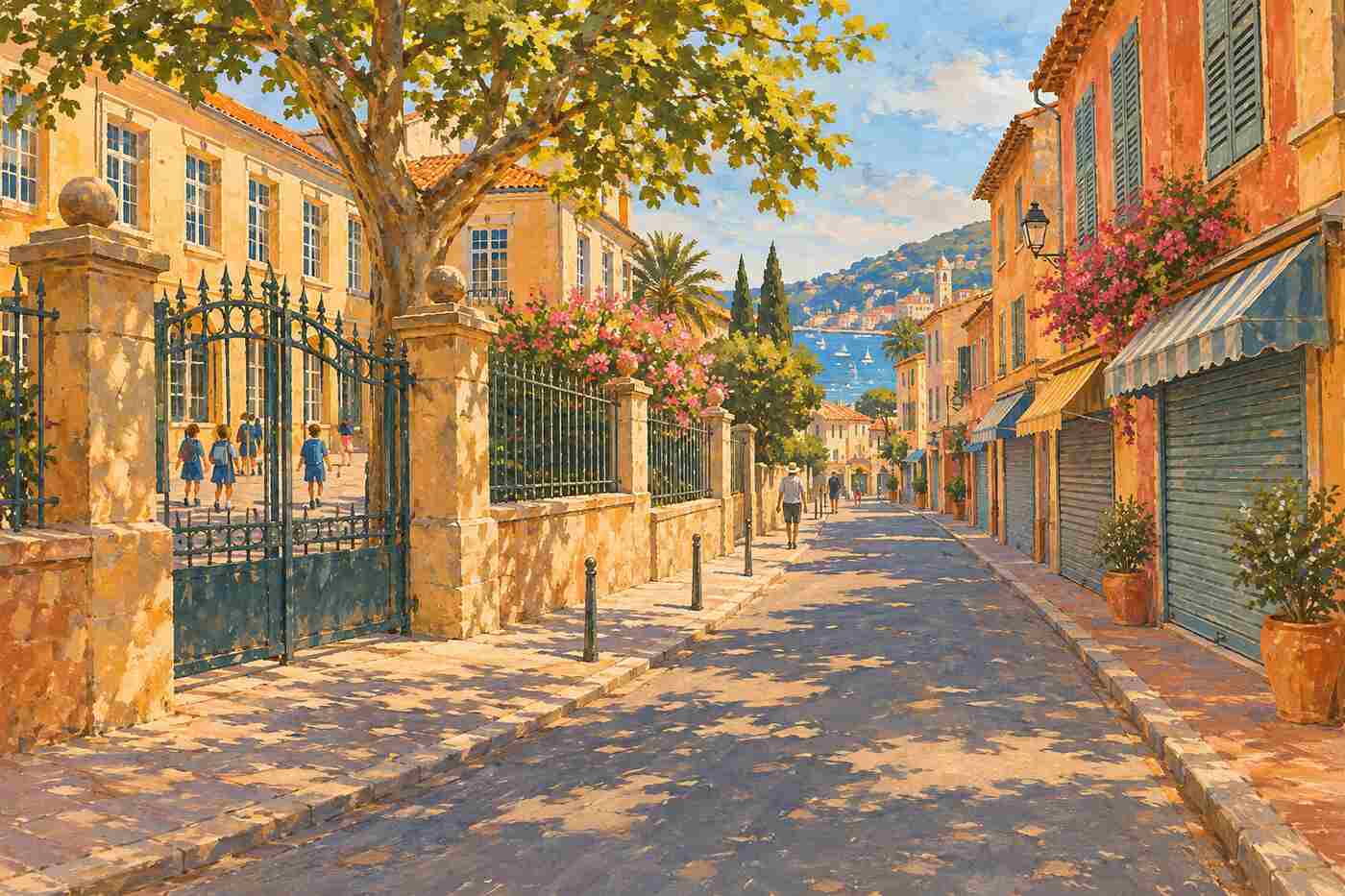
Location rules come next. Service Public Entreprendre explains that there are zones where on-site drinks outlets with a licence III or IV are banned, and quotas that limit the number of outlets per commune. Santé publique France gives the example of protected zones around schools. These rules apply only to on-site drinking, not to restaurants serving alcohol with meals.
Before you sign a lease, ask the town hall whether the address falls in a protected zone and whether the commune has reached its quota. A licence attached to premises you cannot use is worth very little. In Cannes, for example, the bars along rue du Suquet described in our guide to Le Suquet work under the same national rules.
Other obligations and a possible reform
Food and music add more paperwork. The French Business Law guide notes that a bar serving food must also register with the departmental food safety office, the DDPP. Hayot Expertise lists music royalties to SACEM and SPRÉ, terrace fees, a lease deposit and insurance among the costs to budget, and its guide to music royalties says one declaration to SACEM covers both. The Living France guide adds a safety inspection arranged through the town hall and the rule that the licence must be displayed where customers can see it.
The rules may loosen in small places. The Local reported in March 2025 on a bill under which anyone opening a bar in an affected commune would need only a declaration to the mayor to get a licence IV. Check whether it has become law before you rely on it.
Key takeaways
- A bar serving spirits needs a licence IV; wine and beer alone need a licence III.
- No new licence IV can be created, so you must buy or transfer one, with prices quoted at around €10,000 to €20,000.
- The operator must hold an operating permit, earned on a course of at least 20 hours and valid for ten years.
- The opening is declared on cerfa 11542 at least 15 days ahead; the cerfa 11543 receipt is your proof of licence.
- Protected zones and quotas can rule out an address, so check with the town hall first.
Common questions
Can I get a new licence IV in France?
Not under current rules. Service Public Entreprendre says creating a new licence IV is prohibited, so you must buy an existing one and have it transferred. A bill reported by The Local in 2025 proposed an easier route in small communes; check its status before relying on it.
How long does the operating permit course take?
At least 20 hours over at least three days for a first permit, according to the official summary quoted by Voxtya. The permit lasts ten years. To renew it, you take a refresher course of at least six hours before it expires. Hayot Expertise adds that operators with ten years’ experience can qualify through a six-hour course.
Where do I file the bar opening declaration?
At the town hall of the commune where the bar will open, at least 15 days before opening, using cerfa 11542. In Paris and the Alsace-Moselle departments it goes to the prefecture instead. Attach proof of identity and your operating permit, and keep the cerfa 11543 receipt.
Does a restaurant need the same licence as a bar?
No. A restaurant that serves alcohol only with meals can use a small restaurant licence or a restaurant licence. If it wants to serve drinks to customers who are not eating, it needs a licence III or IV, like a bar. The operating permit applies in both cases.
How we put this together: licence types, the ban on new licence IVs, the declaration and the location rules come from Service Public Entreprendre; quotas come from Santé publique France; training details come from Voxtya and OA Formation; prices come from the Living France guide and Licence 4, which do not give the same figure; costs come from Hayot Expertise and the French Business Law guide; the 2025 bill comes from The Local. This is general information, not legal advice. Checked 19 November 2026. Back to the Cannes Evenings home page, or read our Cannes travel tips.
Sources
- Service Public Entreprendre: Licenses of drinking establishments
- Service Public Entreprendre: Where it is forbidden to open a drinks outlet
- Service Public Entreprendre: Selling alcohol at night
- Service Public Entreprendre: Cerfa 11542 declaration
- Santé publique France: Regulations on alcohol
- Voxtya: Restaurant alcohol licence in France
- OA Formation: Alcohol licence training in English
- Hayot Expertise: Opening a bar-tabac
- Hayot Expertise: Café and bar accountant
- Hayot Expertise: SACEM and SPRÉ royalties
- Licence 4: How to open a restaurant in France
- Living France: Running a bar or restaurant
- French Business Law: Regulated activities
- The Local: Plan to make it easier to run cafés in small communes